
Marble in Interiors: How the Look Keeps Changing
Marble has been in and out of fashion for two thousand years without ever really leaving. What changes is not whether it is used but how: as structure, as surface, as status, or as the single sculptural object in an otherwise quiet room. Knowing which phase a look belongs to is useful when you are trying to buy something that will not date.
Structure, then surface
Classical architecture used marble structurally, in columns and lintels and whole buildings, because it was the strongest fine material available. Rome discovered that a thin layer over brick achieved most of the effect for a fraction of the cost, and the idea of marble as a facing rather than a mass has been with us ever since. Almost every marble surface you meet today is a veneer of some thickness over something else, and that is not a modern compromise.
The Renaissance treated it as painting: pietra dura inlay, marquetry in stone, book-matched panels arranged so the veining mirrors across a wall. Those techniques never disappeared, and a book-matched pair of Calacatta Viola tops in a dining room today is the same idea, executed with a diamond wire saw instead of a hand frame.
The modern movement made it plain
The twentieth century stripped the ornament away and left the material. Mies van der Rohe's Barcelona Pavilion of 1929 used onyx and travertine as flat planes with nothing carved into them, and that gesture defined modern stone: a slab, honestly cut, doing its own decoration through veining alone.
Mid-century furniture followed. Travertine and marble tops on slim metal bases, the stone left matte, the edges square. Saarinen's pedestal tables put a marble top on a single cast base and produced one of the most copied objects of the century. Almost everything now sold as a "stone coffee table" descends from that period.
The polished decades, and the reaction
The 1980s and 1990s took marble in the opposite direction: polished to a mirror, in volume, often in bathrooms and lobbies where the goal was visible expense. That association is why marble felt dated to a generation of designers, and why the recovery, when it came, arrived through matte surfaces and humble stones.
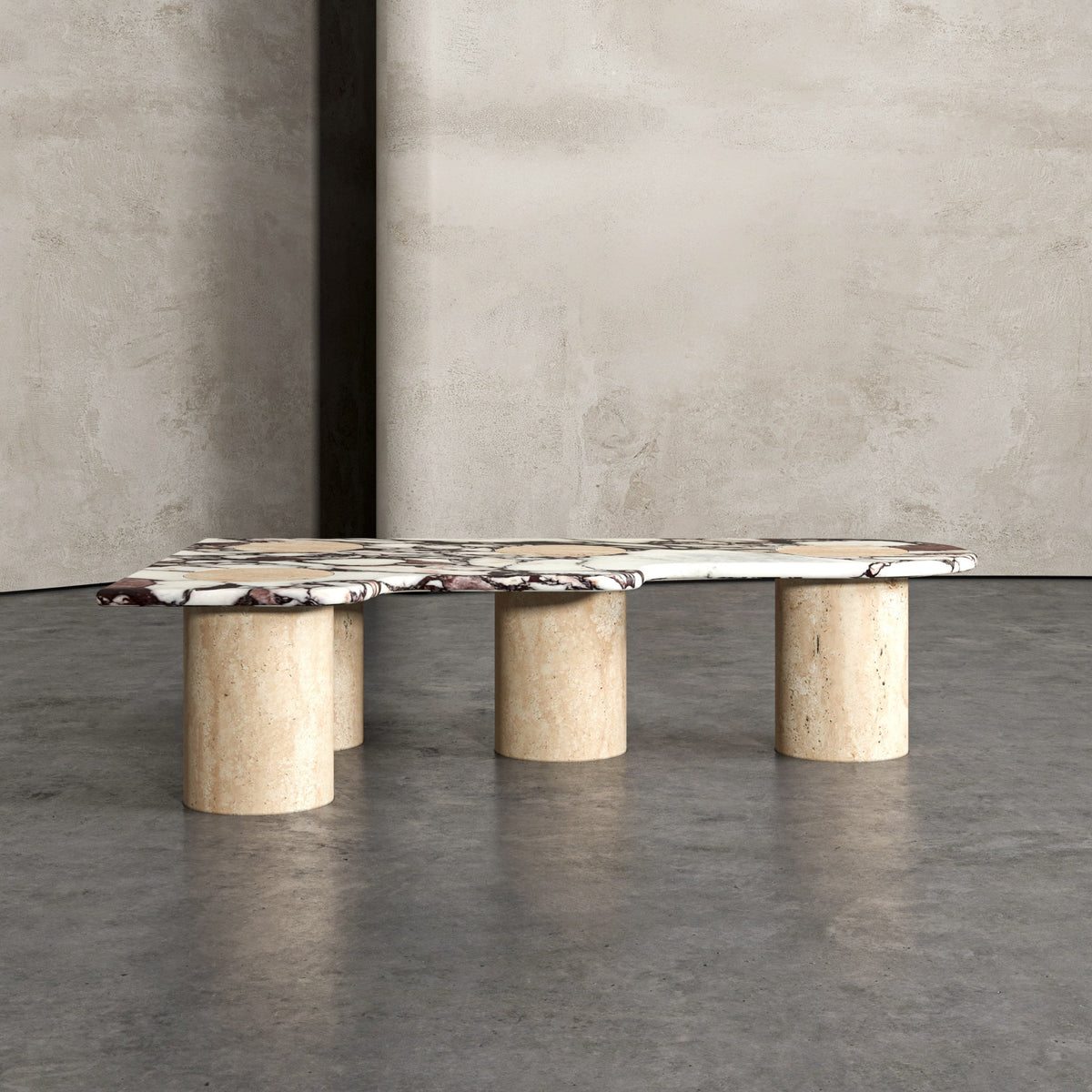
Travertine led it. It had been out of favour for decades, considered a 1970s material, and it returned because it is the opposite of the polished look: warm, textured, tonal rather than dramatic. A travertine dining table reads as quiet in a way a polished Calacatta one cannot.
Where we are now
Four things characterise how stone is being used in interiors at the moment, and they are worth naming because they are also the things most likely to date.
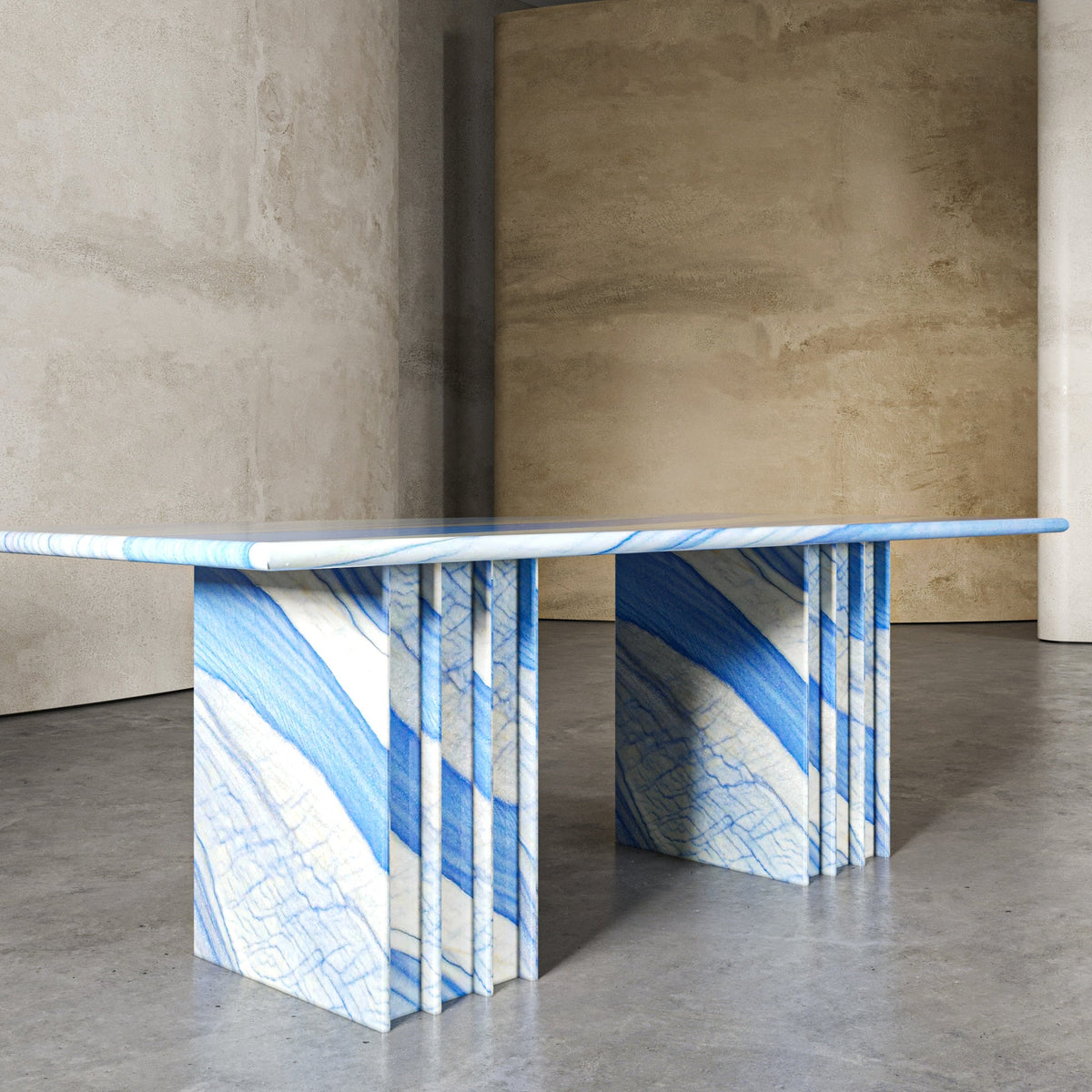
- Colour. After a long white and grey period, green, red, blue and violet stones are everywhere: Verde Alpi, Rosso Levanto, Calacatta Viola, Bolivia Blue. This is the most fashion-driven part of the current moment.
- Sculptural bases. The stone is no longer just the top. Fluted columns, stacked blocks, lattices and carved forms have moved the interest downward, which is only possible because CNC cutting made complex stone bases affordable.
- Matte over gloss. Honed, brushed and leathered finishes dominate, both because they suit the current aesthetic and because they are far more forgiving in daily use.
- Engineered materials outdoors. Sintered stone has taken over terraces and poolsides, where natural stone always struggled.
What actually dates, and what does not
Three decades of furniture suggest a pattern. What dates is the finish and the colour: the high-polish surface, the stone chosen because it was the stone of that year. What survives is proportion and honest construction. A simple travertine top on a well-proportioned base from 1968 still looks right. A mirror-polished, heavily veined suite from 1988 does not, though the material is identical.
If you want a piece to last three decades rather than three years, that suggests a practical approach: choose the form first and let it be quiet, choose a matte finish, and put the drama in the stone only if you genuinely love that stone rather than because it is everywhere this year.
Buying into a long tradition
The reason marble keeps returning is that it does something no manufactured surface does. It records its own history, both geological and domestic. The etch mark where someone set down a glass of wine in 1974 is part of the object now. Materials that cannot change also cannot age, and a surface that looks identical after thirty years has told you nothing.
Our own work sits in that tradition rather than against it: made to order, cut from a slab the client chooses, in forms meant to be lived with. You can see the range in the catalogue, browse the dining tables and coffee tables we build most often, or look through the stone library to see what is quarried today.