

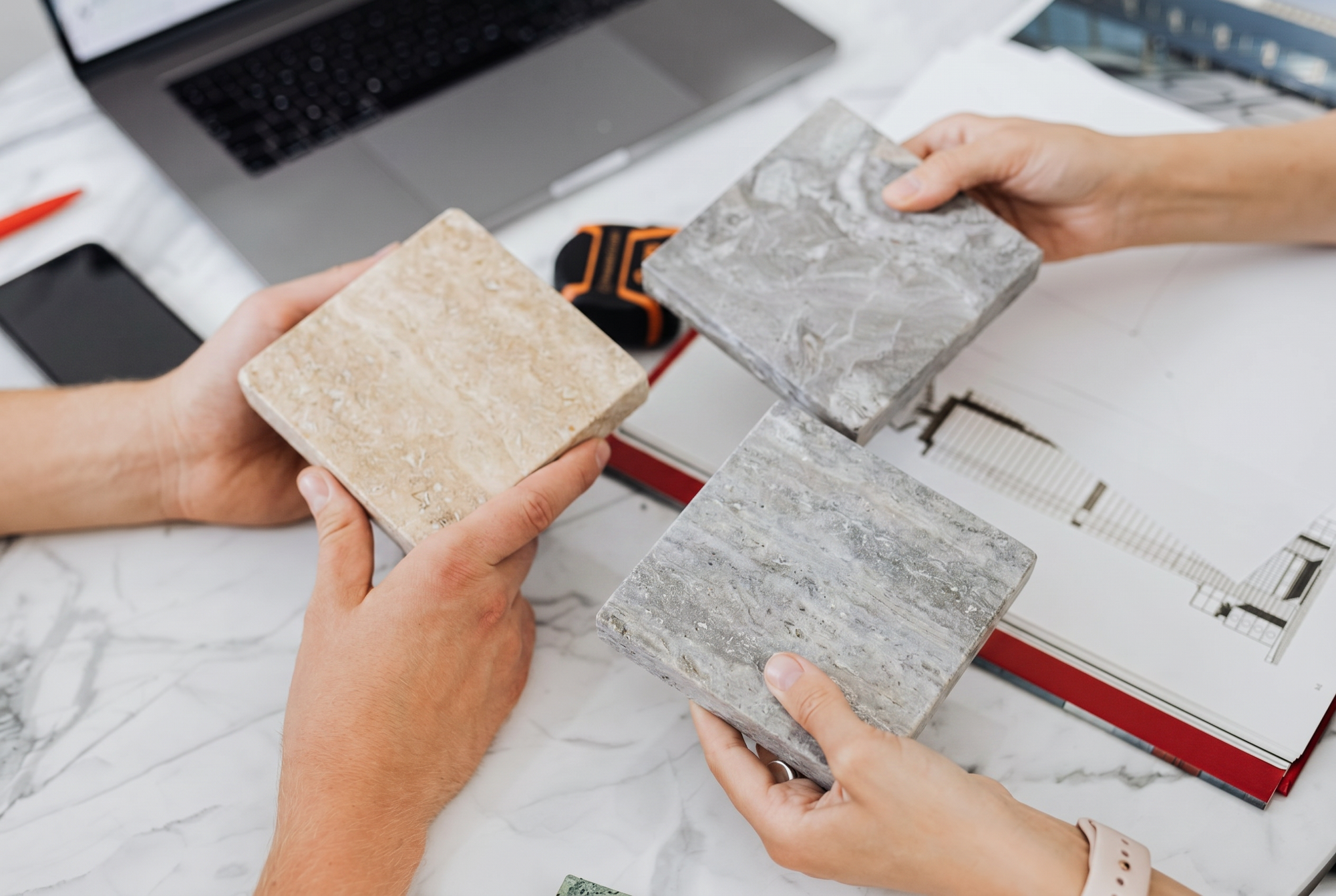
Travertine is reappearing across luxury residential and hospitality interiors because it offers warmth, texture and architectural weight without the high contrast sometimes associated with marble.
- Works across classical, minimal and contemporary interiors.
- Visually softer than many veined marbles.
- Strong fit for dining tables, consoles and monumental furniture.
- Best specified with intentional finishing and proper sealing.
Travertine has never really disappeared. It simply moved in and out of visibility.
For centuries, travertine has carried the language of architecture: columns, baths, terraces, flooring, façades and monuments. Its renewed relevance today is not about nostalgia. It is about a broader shift in interiors toward materials that feel grounded, natural and permanent.
In a market crowded with polished surfaces and predictable luxury cues, travertine offers something quieter. It has movement, but not chaos. It has texture, but not visual noise. It can feel ancient and modern at the same time.
Why travertine feels current again
The strongest interiors today are not built around decoration alone. They are built around material presence. Stone, metal, plaster, leather and wood are being used to give rooms depth before furniture or styling enters the conversation.
Travertine fits this moment because it brings warmth without becoming rustic. Its tonal range, from pale ivory to walnut beige and silver-grey, gives designers a way to soften a room while still keeping the work architectural.
Design note: travertine performs especially well at large scale because its movement remains calm across a broad surface.
This makes it particularly effective for dining tables, coffee tables and consoles. A large travertine table can hold a room without overpowering it. Where a heavily veined marble may become the main visual event, travertine often becomes the foundation.
The hospitality effect
Luxury hospitality has played a major role in travertine's return. Hotels, restaurants and private clubs use it because it photographs beautifully, ages with character and communicates permanence without needing overt ornament.
For residential clients, that hospitality influence matters. People are increasingly designing homes with the atmosphere of boutique hotels: layered, tactile, calm and highly considered.
Travertine supports that feeling. It is substantial without feeling cold. It can be refined without appearing fragile. For custom furniture, that balance is commercially important.
Where travertine works best
Travertine is strongest when the design allows the material to be read clearly. It does not need excessive detailing. Simple forms, generous proportions and considered edges usually produce the best result.
Dining tables
A travertine dining table can anchor an open-plan room, especially when paired with warm woods, plaster walls, stainless steel or soft upholstery.
Consoles
Travertine consoles work well in entryways and hospitality corridors because the material reads as architectural rather than decorative.
Coffee tables
Low travertine coffee tables add weight and texture to living spaces without requiring strong color contrast.
The mistake is treating travertine like a trend. The opportunity is treating it like an architectural material.
Filled or unfilled?
The choice between filled and unfilled travertine changes the character of the finished piece. Filled travertine feels smoother and more refined, making it practical for tabletops and dining applications. Unfilled travertine shows more of the stone's natural pores and texture, creating a stronger architectural expression.
For most dining tables, filled or partially filled travertine is the safer specification. It gives the visual warmth of the material while making the surface easier to live with.
What clients should understand
Travertine is a natural stone. Variation is not a defect. Pores, tonal shifts and fossil-like movement are part of its value. The most successful projects treat these characteristics as the reason to choose travertine, not as conditions to hide.
For made-to-order furniture, the fabrication method matters as much as the stone selection. Edge profile, thickness, base design, reinforcement, sealing and installation all determine whether the final piece feels elevated or merely heavy.
Frequently Asked Questions
Is travertine good for dining tables?
Yes. Travertine is well suited for dining tables when properly fabricated, sealed and specified with an appropriate finish. Filled travertine is usually the most practical option for dining surfaces.
Does travertine stain?
Travertine is porous, so sealing is recommended. Like marble and limestone, it should be protected from prolonged exposure to acidic liquids, oils and highly pigmented spills.
Is travertine more subtle than marble?
Generally, yes. Travertine often has a softer, more tonal appearance than highly veined marble. That makes it useful when the goal is warmth, texture and scale rather than dramatic contrast.
What interiors work best with travertine?
Travertine works well in warm minimal, Mediterranean, contemporary, hospitality-inspired and transitional interiors. It pairs especially well with plaster, walnut, stainless steel, bronze, linen and leather.
Travertine, Specified Properly
Travertine rewards considered fabrication — the right fill, finish, and edge profile are what separate an elevated piece from a heavy one. Aprils Form fabricates travertine dining tables, consoles, and coffee tables to order, with every slab selected for the project.
View Dining Tables → · Console Tables → · Coffee Tables →
For material samples or a specific project, reach our team at hello@aprilsform.com.