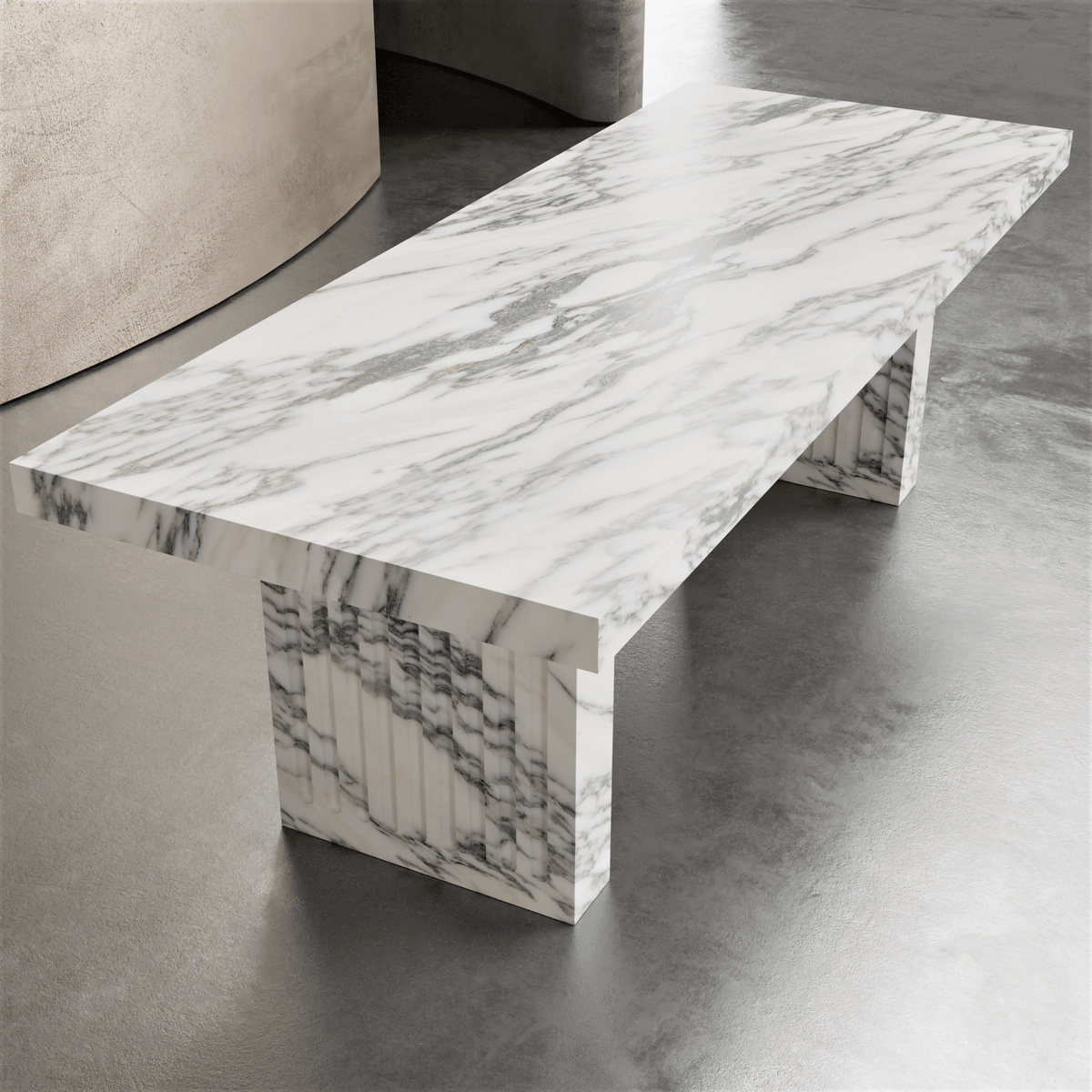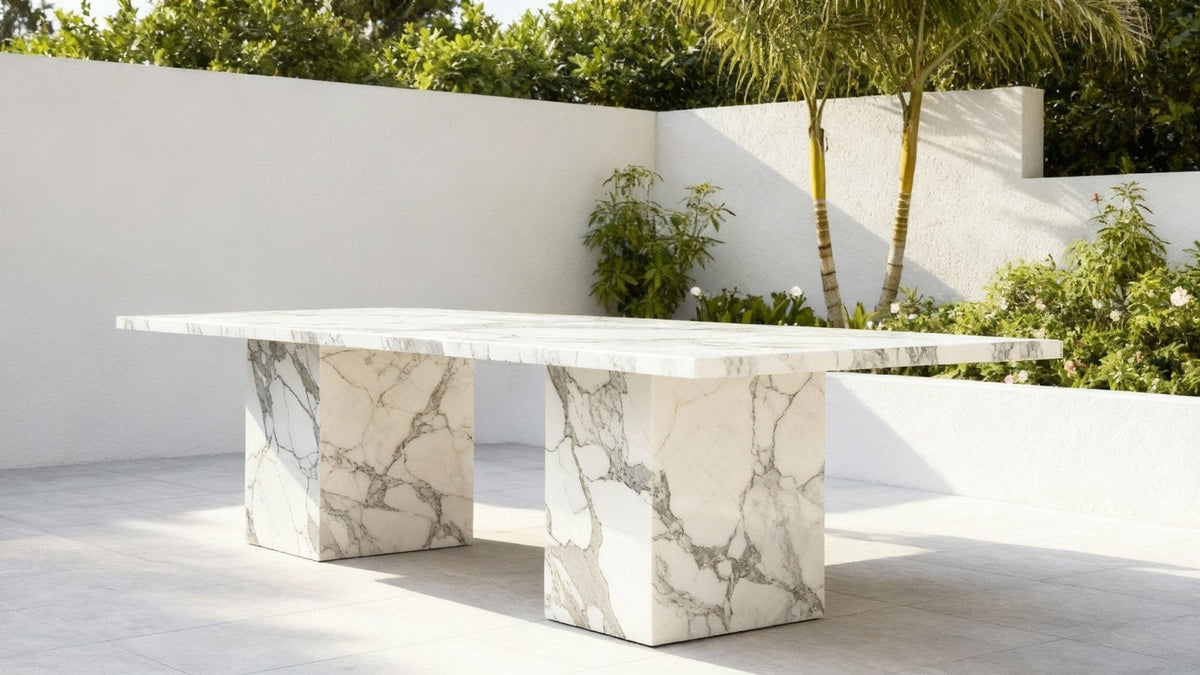

Why US Hotels Specify Custom Stone Furniture
Hotel furniture has a harder brief than residential furniture. It has to look considered in a photograph, survive several thousand guests a year, be replaceable in a hurry if one of them damages it, and arrive on a date that cannot move. Stone has become a common answer in US hospitality for reasons that are mostly practical.
This covers why custom stone is specified for hotels, what it costs over a decade rather than on day one, and how to buy it without inheriting the usual problems.
Why stone, and why custom
The look is the obvious part. Stone photographs well, reads as permanent, and gives a lobby or a restaurant a material presence that veneer and laminate cannot. Designers reach for it when a space needs weight.
The less obvious part is lifespan. A stone top does not delaminate, swell, peel or wear through. Hospitality interiors are typically refurbished every five to seven years, and soft furnishings, casegoods and laminate surfaces are usually replaced on that cycle. A stone top can be refinished rather than replaced, and often carries through two cycles, which is why it looks expensive on a capital sheet and reasonable on a ten year view.
Custom enters because hotel spaces are rarely standard. A banquette run needs tables at specific widths to fit the seating, a lobby needs a console at an unusual length, a restaurant needs forty tops in one stone. Stock furniture cannot do any of that.
The ten year arithmetic
Compare a stone dining top against a commercial laminate one over a decade. The laminate is a fraction of the price, and will typically be replaced twice in that period, each replacement carrying not only the unit cost but the labour and the closed covers while it happens. Stone is bought once and refinished at most once.
That does not always favour stone. In a high-turnover casual restaurant where tables are moved constantly, sintered stone or solid timber may be more appropriate. But in a lobby, a signature restaurant, a spa or a suite, where the surface is part of the impression the property sells, the arithmetic usually works.
What actually goes wrong
Three failures account for most of the trouble we are asked to fix in commercial settings.
- The wrong finish for the use. Polished marble on a restaurant table will etch within months, because staff clean with what is at hand and guests order lemon with their water. Honed, brushed or leathered surfaces hide it, and quartzite or sintered stone avoid it.
- No replacement plan. One damaged top in year two becomes a problem when the stone came from a block that no longer exists. Order a spare with the run, or reserve stone at the outset.
- Access. A 150 inch top that cannot make the turn from the service lift is discovered on installation day. Tops can be split, bases can be knocked down, but only if the question is asked during drawings.
Consistency across a run
This is the specification question that matters most on a hotel project and the one asked least often. Natural stone varies between blocks, so thirty tops from three different blocks will not match, however carefully they are named.
There are three routes. Reserve a single block, which guarantees consistency and costs more. Accept variation deliberately, which can look wonderful when the stone is dramatic and the tables sit apart. Or specify sintered stone, which is manufactured and therefore repeatable. The wrong answer is assuming consistency and discovering the truth at installation.
Maintenance a housekeeping team can actually follow
Whatever is specified must be cleanable with what the property already stocks and by staff who change. That usually means a neutral cleaner, a cloth and nothing else.
Sealing schedules belong in the maintenance manual with a named owner, or they do not happen. If a material needs annual resealing and nobody is accountable for it, specify a different material rather than hoping. Leave a one-page care sheet per piece with the handover documents, and leave a spare sealer with the engineering team.
Buying it well
- Give the maker the use case, not just the dimensions. A table for a lobby and a table for a breakfast room are different specifications.
- Ask for slab photographs and decide on consistency versus variation before fabrication.
- Approve dimensioned shop drawings, including base positions relative to seating.
- Confirm the delivery route, lift dimensions and site access windows.
- Agree phased delivery to match the site programme, and where pieces are stored if the programme slips.
- Order spares, and record which block they came from.
We work with hotel groups, procurement firms and hospitality designers on projects from a single reception desk to thirty-plus units, including bars and hostess stands, restaurant tables and suite vanities. The trade catalogue carries the full range with dimensions and specifications, and the trade program covers project pricing, slab previews, technical drawings and white-glove delivery. Send the drawings and the programme dates, and we will tell you what is realistic before anyone commits.